22.11 – 06.12.2025 | ОNLINE

To crack the numbness of capitalism
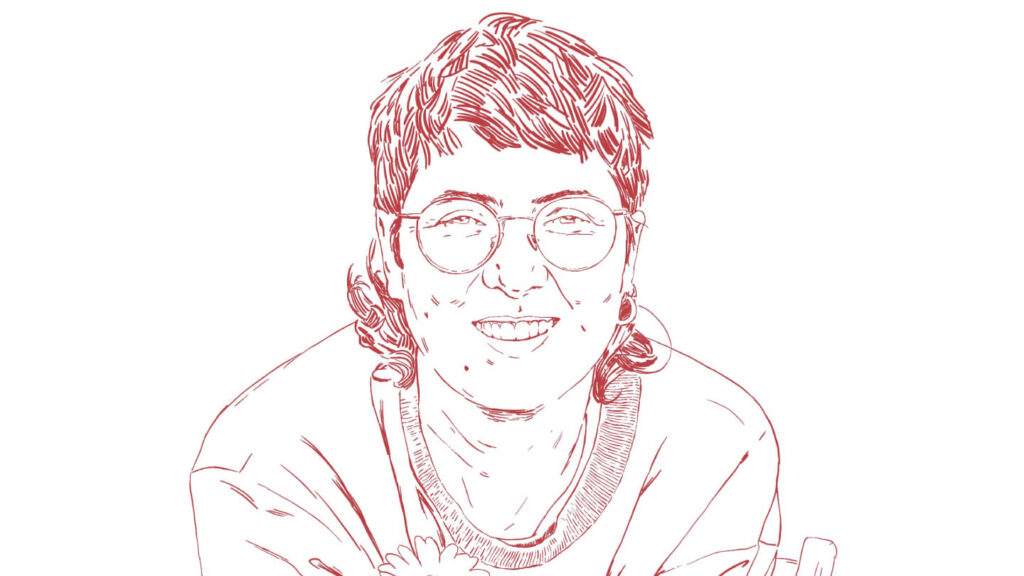
Conversation with Kit Blamire on solidarity and collective creativity
Interview by geo
How did the idea of making a movie spring up? How did your previous art or activist projects influence Flare?
I was studying documentary filmmaking at a self-organised film school in Berlin, and I wanted to make a film following the lives of other chronically ill queers, staying behind the camera. Then I found myself too sick to do this, too busy with medical appointments, which felt ironic, so I started filming things around me instead. I recorded audio at the doctor’s office, filmed footage wandering hospital hallways, filmed around my home, filmed myself.
This process really transformed my experience of spending time in medical settings. I was no longer simply waiting for some confusing and scary information from a doctor; instead, I was on a creative mission to collect sounds, leaflets to cut up, and an interesting clip out of a window. I got home from medical scans, put the CD into my old computer to see what happened, and played with my X-ray results in an editing program. I shed the passive patient role. I created to make sense of things and find myself within it all.
I was feeling rebellious about the message I was getting at film school, that everything connected to filmmaking is expensive, time-consuming, and technically difficult. I followed the urge to do unplanned stop motion in my bedroom, cut stuff up, take photos, use equipment I didn’t understand, do things impulsively, and learn as I go.
Flare was a first time for me for many things – creating a film about myself, playing with stop motion animation, screening at festivals, connecting with other chronically ill people who watched it, and getting something so personal out there for the first time ever.

Flare is a truly poetic movie, full of visual and sonic rhymes, and, of course, a poetry piece at the end. What’s the role of poetry in your art and/or activist practices?
For a long time, my activism was about mutual aid, being practical, getting shit done, projects, protests, bam bam bam. Then I got sicker and couldn’t rush around doing all the things. I lost my footing in the cultures and collectives I had been part of before, and I started writing poetry and art and finding ways to express my politics through creative channels. I find poetry and art can reach people in ways that logic and argument cannot. It opens portals towards solidarity and breaks cracks in the numbness that is required by capitalism. Writing poetry is a support – it helps me find my way through despair, anchors me, and gives me strength. Most of my poetry stays unfinished and in notes apps or random docs. I love doing daily poetry challenges with people over email. I like creating stuff that people feel touched and strengthened, and accompanied by.
Central themes in Flare are solitude and kinship. How can we politicize/problematize them in the context of battling capitalism and the medical-industrial complex?
Isolation and feeling discarded are such a core experience in chronic illness. Capitalism discards people who can’t produce profit or be exploited. Our own communities discard the same people because capitalism and its principles seep into our bones, childhoods, and the air around us, and because we cannot face up to our own future destinies of sickness and disability in a world that is going to discard us, too. The dominant culture promotes stigma and silencing around disability, so those with weak and rebellious bodies are kept separate from the rest of society. Fascism erodes our outrage at abandonment and neglect. The poorer and more oppressed someone is, the worse the medical industrial complex will treat them. We get sicker and sicker as our planet does too, yet capitalism has prized care out of our familiar hands, and we are lost. We are all going to get sick or disabled one day, if we aren’t already, so this struggle is in everyone’s interests and every struggle should include an analysis of the role of healthism in fascism, of ableism, eugenics, care, how states manufacture the sociological end of pandemics, how war, poverty, colonialism, incarceration, climate collapse affect our bodies, the medical industrial complex and know about histories of disabled resistance.
It can be indescribably isolating to be sick/disabled and to be alone in something that we are, in fact, literally in together. Many disabled people are so unsupported and rejected by people around them and neglected by systems that claim words like care. When sickness is transformed from an unaccompanied to an accompanied experience, it is a total game-changer. Spaces where sick and disabled people gather and connect are full of ingenuity and solidarity, and realness. Everybody needs a sick comrade.

One of my favorite moments in your movie is when you and your friends are at the demo. How can, in your opinion, activism and activist spaces be more accessible and inclusive?
Sick and disabled people have unique perspectives and wisdom on autonomy, care, collapse, self-determination, institutions, survival, community, world-building. Any movements that ignore the secrets of the sick do so at their own peril. Any worlds that these movements manage to build will be repetitions of the old.
It all begins by acknowledging that we are all either sick/disabled or simply not yet sick/disabled. Once the denial has begun to dissolve and this has been grieved and faced, then we can actually get going. Starting from a place of understanding that we all have bodies that are fragile, fluctuating, needy, limited… after that, things become less complicated, and care takes its rightful place at the centre of everything. Accessibility becomes joyful and obvious, and as important as any other aspect of organising, once you stop accepting the burden narrative and you start problem-solving. It’s actually about you and your mates and everyone and solidarity. Being serious about struggle means being serious about the long term, about figuring out what we actually need to stay committed for a whole lifetime, about caring for our comrades, about creating movements that you won’t be excluded from yourself when sickness or disability comes knocking, about working in connection with the seasons of our bodies, the changing seasons of who is sick this year and who might be sick next year, who needs care today, who is giving care tomorrow. We are all passing it around, we are all holding it, we aren’t leaving anyone behind.
If we’re discussing activism, self-organization, and support networks, could you tell us about the Sick Comrade community and its projects?
Sick Comrade is a project that brings together anarchist principles, poetry, disability justice, art, mutual aid. At the end of 2022, we created a poetry zine about sickness. In getting it out there, we decided we wanted to keep creating and connecting to fellow anarcho sickos. It started with just an email address on the back of the zine, then became a mailing list and a website, and is growing into a network of people hungry for radical ways of understanding sickness and disability. We have created a collective zine about Sick Comradeship with many wonderful contributors from around the world. We printed a series of risograph posters about what sickness and disability mean to us, that we use to fundraise for those in need of solidarity and give to people who are moved by them. We are developing mutual aid projects for supporting people isolated by sickness here in Berlin. We do things slowly, and the three of us in the collective support each other through our own adventures with disability and care work and wrestling things from doctors.

Collective trauma caused by COVID is a topic that is rarely talked about. In the context of Ukraine, it’s an unexplored topic mainly because of war and the traumas it brings. Could you tell us about your work on documenting pandemic grief?
I run workshops about processing pandemic grief together through collective filmmaking. The next one is coming up in February with RestFest – a film festival of sick and disabled filmmakers. The workshop is a space to share and create about the ongoing pandemic grief. Most of the people who come to the workshop are sick, disabled, immunocompromised, many have long COVID, and all of us are recognising the ongoingness of the COVID-19 crisis, and all of us are grieving the forced forgetting and the impact that this ideology has on our daily lives. As well as sharing about our grief, we explore DIY filmmaking skills in the workshop. In the weeks after, everyone creates a 1-minute film to express a part of their grief, and I edit them together to create a collective film. We have a screening one month after the workshop to get together and watch what we have created together and talk about the process. I love running these workshops, creating this space for people who are grieving, editing the films and expressing myself with others in this way.
The political move to pretend COVID is over is deeply ideological. A widespread acceptance of this political agenda has settled like a fog of forgetting over the dominant culture. I am interested in documenting the experiences of people who are struggling against this fog. I want to understand the fog better, look at it closely, see through it, see who else is examining it and trying to wade through it. In 2026, I am launching an oral history present project in Berlin. I will be collecting stories and perspectives from those still recognising the COVID-19 crisis as an ongoing and present-tense reality, documenting and creating with these stories. I am excited to see where the project goes.
If we’re talking about collective movies that you edited/assembled during your workshops on processing grief. Could you share your thoughts and insights on collective filmmaking? Maybe some advice?
What I like best about my experiences with collective filmmaking is the knowledge that you are making one part of something larger, so you can lean back on the collective and know that what you express is part of a bigger whole. Others will express things you can’t, and you’ll be expressing things that will touch others. It takes away the pressure of creating to explain, or to paint a whole picture, because many contributions will weave together to create something rich with many dimensions. It is freeing.
I made my film Flare with a bad quality smartphone, did the stop motion in my bedroom, experimented with techniques I had never used before, recorded sound and footage impulsively. I love DIY filmmaking, and that is the approach I share in my collective filmmaking workshops because I believe that filmmaking is for everyone. It can be filmed from bed, recorded as a voice note, done very slowly over long periods of time, done in a day. Limitations lead to creativity. Limitations tell a story. Editing a bunch of different creations together is always so surprising and brilliant to see what emerges. People who have never played with film before produce the most incredible stuff. I lost interest in the stressful, burnout-y film sets I experienced at film school, and I love the community-building aspect of the collective filmmaking experiences I have had. Creativity can be really vulnerable and connecting.
Links:
https://kitblamire.com
htpps://sickcomrade.com
Collective films from the pandemic grief workshops:
https://vimeo.com/user246179449