22.11 – 06.12.2025 | ОNLINE

Being an Activist in Ukraine: Layma Geydar and the Start of Feminist, Lesbian and HIV Activism of the early 2000s
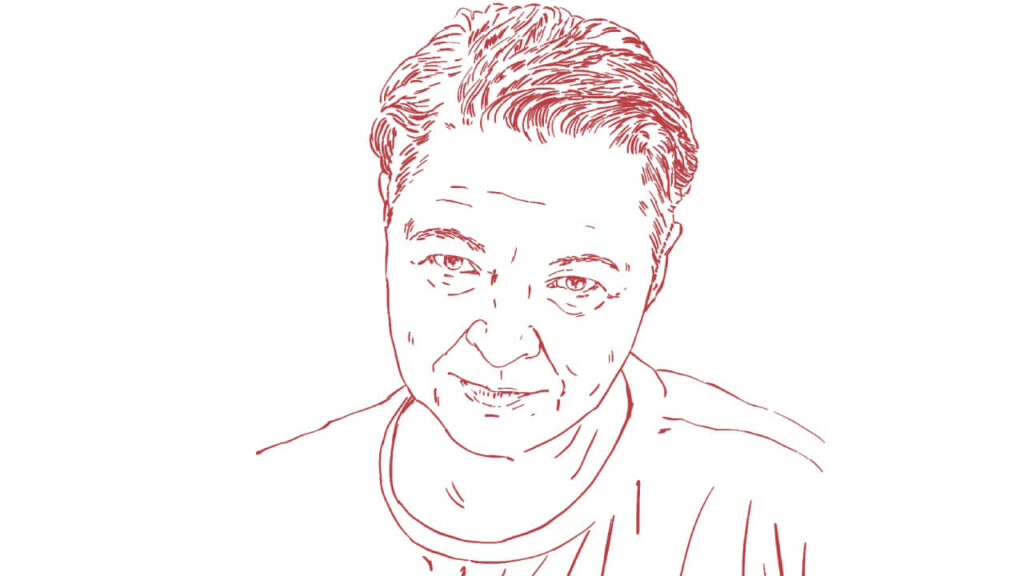
This year, Filma Feminist Film Festival has offered a program dedicated to trans* and lesbian HIV activism: “Taking Care of Yourself, Taking Care of Everyone”. We are publishing a conversation between Yana Dzyga, a member of the Filma collective, and Layma Geydar, an HIV activist and founder of the Women’s Network information and education centre, one of the first lesbian feminist organizations that has significantly contributed to the development of the feminist and LGBT movement in Ukraine.
What did your activism start from in the 1990s and early 2000s?
That’s not easy to answer. I don’t really know what my activism started from: my civic stance, probably. You know, I always say I need a training on how to stopbeing an activist.
What was the atmosphere of your youth like?
People who haven’t lived in the Soviet Union don’t understand what life was like back then. There was no rock music; there were no films you wanted to watch on TV. There was only the party line, and that was it. You couldn’t wear the clothes you wanted to wear. Non-heterosexual orientation was considered a symptom of schizophrenia and treated in a psychiatric hospital. As I was studying medicine, I was actively searching for any information about sexual orientation. Because there was no internet, no specialist literature; there was simply nothing. A total vacuum. All I managed to find was that homosexual orientation was labelled as sluggish schizophrenia. This “diagnosis” existed only in the Soviet Union. No one knows what it even is. One could make it mean anything they wanted.
When did you get to know the community, and how was the idea of creating Women’s Network born?
Sometime in the ’90s, I fell madly in love with a girl from Moscow and moved there. Basically, I was there as a labour migrant, got more than my fair share of their “Great Russian” chauvinism, and returned to Kyiv in 1998. For a long time after I returned home, I had no entry point into the lesbian community. I met other lesbians only when I started dating my first girlfriend in Kyiv. There were also message boards and dating websites. For instance, the Bizzare chat, Gala.net, Kyiv message board Doska, message board www.lesbi.org.ua. This active online life led to the idea of creating a website where lesbians could communicate. I also realized it would be a good idea to found a public organization. This is how the Women’s Network information and education centre emerged in 2000.
Did registering the organization prove difficult at the time?
Oh, it was literally circles of hell. I rewrote the charter many times, it had about five versions. The word “lesbians” was not supposed to appear anywhere at all. However, I managed to keep the word “feminism” in. I said I would take them to court for violating my rights and spare no effort to expose the situation in the media. That made the officials come to their senses.
Did the organisation have any funding?
At the time, I was in contact with Olena Suslova, the then head of the Ukrainian Women’s Fund. They gave us a grant: 120 dollars. Thanks to that—thanks to those 120 dollars—we had such a strong start! I’m still amazed at how much energy and strength I had. In 2002, we conducted the first “Being a Lesbian in Ukraine” study. Based on its results, we published a book with the same title. The book and the study became possible thanks to my good friend and comrade Nataliia Nahorna, whose scientific thinking I deeply respect. By then I was working in the International HIV/AIDS Alliance in Ukraine (after I left the All-Ukrainian Network of People Living with HIV/AIDS). I can only say that at the time, both in Europe and in the US, HIV was considered the gay community’s problem. Here, meanwhile, HIV mostly affected people who used injection drugs. In the early 2000s, no treatment was available in Ukraine. You know, when—for instance—English people arrived here, the staff of a British partner organisation working on prevention and treatment, they brought with them a limited supply of medication for a year and wanted gay people specifically to get it. Eight people in all of Ukraine were receiving antiretroviral therapy. Eight! On top of that, only two of them received treatment from the state, as part of a medical study; activists smuggled in medication for the others.

Meanwhile, the epidemic was already raging. Can you tell us more about your work in an HIV service organization?
In 2002, Doctors Without Borders tasked me with creating a series of brochures on the psychological problems and emotions experienced by people when interacting with HIV-positive individuals. Later, Kostia Lezhentsev, a doctor who worked with Doctors Without Borders, persuaded me to start managing PR for the All-Ukrainian Network of People Living with HIV/AIDS. That was how my HIV activism began. I started talking to people who wanted to register as an organization, because the Global Fund needed a national partner to fight the epidemic in Ukraine. Before joining the staff of the NGO, I worked as a volunteer for two years and managed to get a lot done: a website, a heap of presentations in different languages. We also organised our first event on World AIDS Day to commemorate people who died of AIDS. We involved a record number of university students in that event as volunteers. We also held a press conference, which I prepared materials for. I did it with these golden hands: writing and inventing everything from scratch (laughs). In 2004, when I said goodbye to the All-Ukrainian Network of People Living with HIV/AIDS, I was the head of their PR department. By then, I had gained vast experience and skills in the sphere of public health in terms of managing our client organizations’ events.
In parallel to that, Women’s Network also existed?
Yes. On March 8, 2002, we launched the website of the Women’s Network information and education centre; the following year, a lesbian message board started working on the website, too. In contrast to gay organizations—they have more resources, financial and technical assistance at their disposal—lesbians all around the world solve their problems themselves. Also, people mistakenly believe that we as a group are not at risk of HIV/AIDS. We continued fighting against these stereotypes, and in 2006, Women’s Network received a grant for HIV/AIDS prevention among lesbians from a Dutch organisation. This happened for the first time in human history ever; definitely for the first time in Ukraine and probably for the first time globally as well (smiles).
In the 2000s, what did people in Ukraine know about HIV? Or rather, did they know anything at all?
Clinics were plastered with terrifying black-and-red posters everywhere saying things like: “You will die on a hospital bed, alone and in terrible agony”. Testing was only for people who used drugs, sex workers, and homosexuals. Moreover, police were supposed to collect the addresses of homosexual people, including lesbians, then go to their homes and check whether anything “immoral” was happening there.
Have you ever encountered the seemingly less obvious phenomenon of stigma toward those with HIV-positive status within the lesbian community?
I knew very few lesbians with HIV-positive status, and unfortunately, they were always surrounded by stigma because of their bisexuality or drug use.
I actually remember attending the meetings you organized; you talked a lot about the prevention of sexually transmitted diseases and about HIV. Did the community distinguish between such concepts as gender identity and sexual orientation?
Not at all. All these things you can read or watch on YouTube now, they are something we have today. Thirty years ago, the terminology did not exist. We had to do everything from scratch and by ourselves. I was the first to conduct academic research and create a glossary on homosexuality, gender stereotypes, and so on. It was published on feminist.org.ua; at the time, the website belonged to us. Later, my academic sister in crime, Alla Yaroshenko, and I made several publications on these topics within a couple of years, creating guidelines for medical personnel and social workers.

It’s also worth mentioning that in 2007, you published the book Being a Lesbian in Ukraine-2.
Yes, we reworked the first book with the same title, supplemented it with research. We had a couple of focus groups in different regions of Ukraine and analysed 98 questionnaire responses submitted by lesbians; that was incredible! We published the book, held a press conference at UNIAN and a presentation for the community at Brodiacha Sobaka (The Stray Dog) in Kyiv. Do you remember this friendly bar? We organized events there quite often. There was a huge turnout! We wanted to celebrate everyone who participated in the focus groups as co-authors. Just imagine: stacks of books wrapped in paper, we unpack them, everyone signs copies, rejoices, and gifts them to others… God, it was simply amazing!
I remember that book very well, as Anna Pysarchuk (that’s the pseudonym she adopted at the time) and I edited it. That was one of my first volunteer experiences, by the way. There were also summer camps you organized under the auspices of Women’s Network. Can you say more about that?
Listen, I believe that the entire feminist lesbian movement grew out of those summer camps. In 2002, Volodymyr Zhovtiak, Head of the All-Ukrainian Network of People Living with HIV/AIDS, invited me for the first time to a camp for people with the experience of drug use. Participants could relax, attend trainings and receive psychological support. Having no experience of living with HIV or of drug use myself, I learned a lot from HIV-positive people and people who had experienced drug use. Their life stories as well as a will to live and optimism greatly inspired me. The following year, I realized that lesbians in Ukraine also needed such a camp. So we organised the first one in 2003, and then held it for eight years in a row. We had participants from all over Ukraine.
There were so many people around you all the time. How did volunteering work back then?
People found us on the internet, offered us their services. Besides, there were publications about us in the media. Perhaps you remember this magazine, Korrespondent. In the 2000s, they wrote something positive about Women’s Network once every couple of months. In the context of the time, Korrespondent was very progressive. By the way, they were the first to write about the attempt to organize a pride in 2004. They wrote about the rainbow flag we had sewed with community funds and tried to display during the Run for Life event.
For me, it was a legend, the stuff of rumours. Please say more about it!
I was on the organizing committee of the Run because at the time I worked in the International Charitable Foundation “International HIV/AIDS Alliance in Ukraine”. In parallel to that, Nataliia Nahorna and I conducted a training on the history of activism and on strategic planning for the LGBTQI+ community. It was clear to us that during this “well-mannered heteronormative” event we had to unfurl our big (9 by 4 meters) and rebellious rainbow flag in memory of gay people who died of HIV/AIDS.
How long did you manage to hold the unfurled flag for?
We didn’t even manage to unfurl it because we, 30 girls and Petro Poliantsev, who held the bag with the flag inside, got surrounded by a group of young men with military bearing, about 50 people in black shirts. They started beating Petro up, twisting his arms. I jump in, pull Petro out of their clutches, grab the bag. Now, they are trying to break my super expensive camera and snatch the flag from me. I run through the whole crowd to an area they could not get into and hide the flag there. I then try to explain to the UN representatives that we have been attacked and need help, but the start signal sounds and the entire five-thousand-strong crowd starts moving along Khreshchatyk. Complete chaos! After the run, we wanted to gather in the park under the monument to Volodymyr the Great: just sit, talk about the pride and about traditions, hand out more copies of Being a Lesbian in Ukraine. But we were being watched there, so I asked everyone to take off the rainbow symbols we had handed out and leave carefully.
I thought you actually unfurled the flag…
Had we unfurled that flag, there would have been bloodshed. Those young men in black shirts would have simply killed us.

How did you get people to join in to get the flag made? “Dear all, let’s sew a rainbow flag”?
An announcement was placed on feminist.org.ua. We had an email database, so I sent everyone a letter saying basically: if you want to get involved, you can donate five hryvnias. Only five, it was a matter of principle. We spent 400 hryvnias in total. Divide that by five, and how many people who participated do we get?
80! Perhaps you would like to mention some who worked alongside you?
I am very grateful to Nataliia Nahorna. Very. We are still friends. I am also very grateful to Kiana Tabakova, our organisation’s project manager. I remember Hanna Dovbakh with fondness. She is a co-author of Being a Lesbian in Ukraine—2. Olha Oliv, too; for many years, she was developing, expanding, and maintaining the web portal and served as the administrator of both the website and the message board. Apart from this, she was also my deputy in Women’s Network. We had a great team.
I want to note that your name has been unfairly forgotten. I have always considered you a pioneer in the fight against homophobia, stigma, and discrimination against people with HIV. May I ask why and how you left activism?
Look, my name was splashed all across all media: Layma, the L-activist. Out in the street, everyone recognized me. I was regularly—several times per month—featured in news programs, talk shows, and so on. And I was always alone, without comrades; that’s just how it was, because the level of homophobia was simply off the charts. Besides, I worked with the topic of HIV/AIDS. You know how it goes: “We need a comment; let’s have Layma comment”. This publicity got me into extremely unpleasant and dangerous situations: I was threatened more than once, and there was a time when a man swung a knife at me next to my house while shouting “Death to f…s! Death!” I barely managed to dodge the knife.
I was also unemployed for many years, because as an openly homosexual public figure I failed job interviews. Plus, my former colleagues were in no hurry to offer me work in the NGO sector. In these circles, I often felt dismissed, faced unscrupulous competition and even harassment coming from gay men. This made me very sad, because you have to eat something, you have to pay rent, you know? I remained unemployed until I returned to the health care sector, specifically to emergency medical services, after the Revolution of Dignity in 2014.
Have you experienced homophobia while working in EMS? Did people recognize you there?
For sure. Homophobia is an integral attribute of a Ukrainian public official. For example, the first-aid station director would summon me and say: “I know things about you. I know about your perversion, too”.
In 2014?
Yes, in 2014 someone googled me, looked me up on the internet. All my coworkers whispered behind my back. Meanwhile, I am the kind of person who simply can’t stand by and watch, I have to defend someone, you know. Because of that, and despite the fact that I am a lesbian, the drivers later asked me three times to become their trade union leader. In EMS, they use vehicles that flip over, so our doctors and drivers keep dying in accidents. The drivers wanted me to help them fight. The leader of our medical union asked me, several times, to withdraw my resignation because I played a key part in the staff’s resistance and fight for better working conditions and a salary increase. Unfortunately, I no longer had that much energy, so I said no to everyone, but I really appreciated the degree of their trust.
Layma, thank you for the frank conversation. It means a lot.
Thank you, and thank you to the Filma team. Thank you for remembering.
Yana Dzyga, a member of the Filma Feminist Film Festival team, expresses her sincere gratitude to geo and Ira Tantsiura for their support and advice while working on this interview.